Free guide
Menopause Belly: Why Your Body Changed and What Actually Works

The short answer
Same weight, different shape
Maybe the scales haven’t moved much, but your jeans fit differently and your middle feels softer than it ever has. You haven’t changed what you eat. You might even be doing more than you used to. So what’s going on?
You’re not imagining it, and you’re not doing anything wrong. This is one of the most common changes women notice from their mid 40s onwards, and there are good reasons for it.
Why it happens
Your hormones change the pattern. For most of your adult life, oestrogen has quietly influenced where your body keeps its fat stores. As your levels drop through perimenopause and beyond, that pattern changes, and your middle becomes the place your body favours. It’s why the number on the scales can stay put while your shape and the way your clothes fit feel completely different.
You lose muscle unless you use it. From midlife, muscle slowly declines unless you train it. Less muscle means your body uses less energy each day, so the way you’ve always eaten can quietly add up.
Sleep and stress play a bigger part than you’d think. Night sweats, a busy mind and a long list of people to look after all chip away at your sleep. Poor sleep makes you hungrier and makes it harder to choose well. Ongoing stress keeps your body on alert, which doesn’t help either.
Hormones are only one piece of the picture. Getting older, sleeping less, moving differently and carrying more stress all add up at the same time. That’s actually good news, because most of those are things you can work with, one small habit at a time.
Why "eat less, move more" stops working
When the advice is to eat less and do more cardio, many women end up tired, hungry and losing muscle, which makes the problem worse over time. What your body needs now isn’t less. It’s different: more strength, enough protein, and more rest than you’ve been giving yourself.
What actually helps
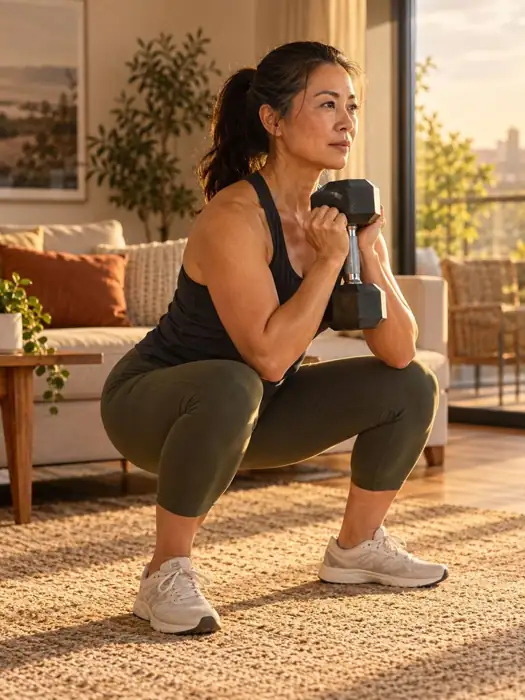
Lift something, two or three times a week. Muscle is your best ally in midlife. Australia’s physical activity guidelines recommend muscle strengthening on at least two days a week. You don’t need a gym. My guide to strength training through perimenopause shows you how to start at home.
Protein at every meal. A palm-sized serve of protein (eggs, Greek yoghurt, chicken, fish, tofu or legumes) helps you feel fuller and supports the muscle you’re building. Breakfast is the easiest place to start.
Crowd out, don’t cut out. Rather than a list of banned foods, add vegetables and fibre to your plate first. Then notice where sugary drinks, alcohol and snack foods creep in, and change one thing at a time.
Protect your sleep. A 15 minute wind down before bed makes a bigger difference than most women expect. Screens off, lights low, something calm.
Lighten the load. Ongoing stress keeps your body on alert. Handing one small thing back each week counts.
If you’d like a gentle place to start with all of this, the 5R Blueprint walks you through it one week at a time.
When to see your GP
- Weight gain that’s sudden or doesn’t make sense to you
- Bloating that doesn’t settle, or a swollen tummy
- Pain in your tummy or pelvis
- Changes to your periods or bleeding after menopause
- Anything that worries you



Five gentle weeks to start feeling like yourself again
$167 · Start any time
Common questions
What foods should I avoid for menopause belly fat?
Can you get rid of menopause belly?
Does strength training help menopause belly fat?
Is menopause belly fat dangerous?

Corrina Steele
Related guides

Better Health Channel: Menopause and weight gain
Australian Government Department of Health: Physical activity and exercise guidelines for adults